
From Dream to Empire: Reflecting on iFerg’s Journey with Tribe Gaming
iFerg's co-ownership at Tribe Gaming and Tribe Frags redefined mobile FPS, building a content empire.
I still remember the day in 2022 when Luke ‘iFerg’ Fergie announced he was becoming co-owner of Tribe Gaming. As a longtime fan of mobile shooters, I couldn’t help but feel a surge of excitement. How often do you see a content creator who started out grinding Call of Duty Mobile actually taking the reins of a major esports organization? It felt like one of those turning points that would reshape the entire mobile FPS landscape—and looking back from 2026, it absolutely did.
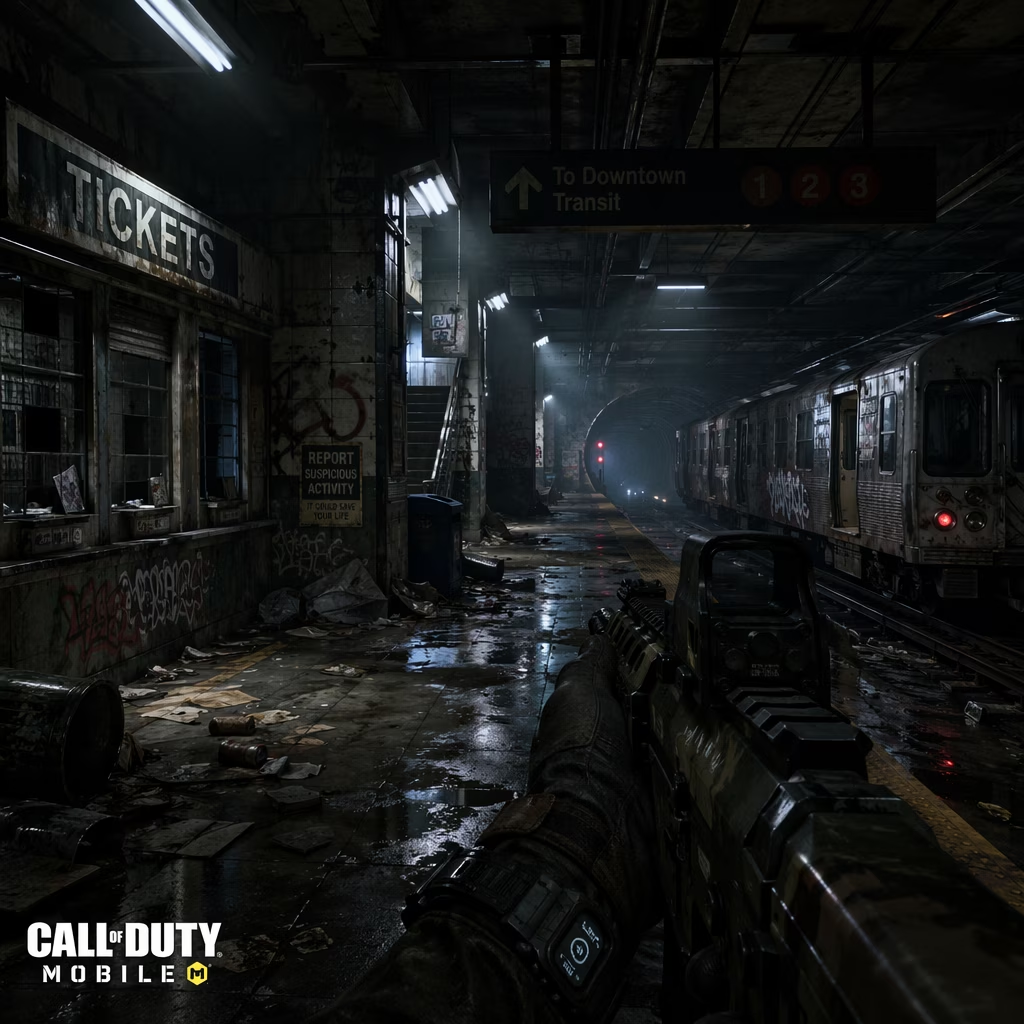
At the time, iFerg was already a legend. He had dominated competitive COD Mobile, then seamlessly transitioned to Apex Legends Mobile, claiming the top spot on global leaderboards. But becoming co-owner of Tribe Gaming wasn’t just a vanity title. It came with a bold new project called “Tribe Frags.” The idea was ambitious—to create the cultural center of mobile FPS on YouTube. I remember watching the first video, “Ferg Controls My Life For 24 Hours,” where creator Imow had to perform embarrassing dares in public. It was goofy, sure, but it signaled something bigger: a shift from solo content creation to building a shared universe of personalities.
And can you guess what was going through his mind years earlier? iFerg tweeted in early 2020, “It’s my dream to build a content creation empire with millions of people following from all around the world. I will do everything in my power to make that a reality.” That tweet aged like fine wine. Today, the Tribe Frags channel has ballooned into a sprawling network, blending high-skill gameplay with reality-show style entertainment. Creators like HawksNest and Imow have become household names among mobile gamers, and the collective uploads regularly pull millions of views within hours. The “empire” iFerg once dreamed about is no longer a vision—it’s a thriving, self-sustaining machine.
What truly fascinates me is how Tribe Gaming leveraged iFerg’s competitive edge to push into esports even harder. Before he joined as co-owner, Tribe already had a solid roster, but his arrival injected a new level of intensity. The team’s performance in major tournaments—especially in COD Mobile and the later emergence of Warzone Mobile—improved dramatically. They started qualifying for world championships consistently. I often ask myself: would this have happened without a co-owner who actually understands the grind of a pro player? Probably not. iFerg’s hands-on approach meant scouting raw talent directly from ranked lobbies, mentoring them, and plugging them into an ecosystem that rewarded creativity as much as skill.
Now, four years deep into this partnership, the influence is undeniable. Tribe Gaming hasn’t just survived the mobile gaming boom; they’ve defined it. Their merch line, which launched alongside the original announcement, has become a streetwear staple at gaming conventions from Los Angeles to Berlin. The “Tribe Frags” brand expanded beyond YouTube into short-form video platforms, and rumor has it they’re developing an in-game tournament system for mobile FPS titles. Even more impressive, the community has grown to include fans who never touched COD Mobile but were drawn in by the sheer entertainment value of the creators’ antics.
But here’s a question I keep coming back to: what makes a content creator truly capable of leading an organization? iFerg never set out to be a business mogul. He was just a guy with insane aim and a dream. Yet, the authenticity he brought to Tribe Gaming seems to be the secret sauce. Fans felt like they were part of the journey, not just customers. When iFerg lost a crucial 1v1 in a tournament, the whole Tribe community mourned with him. When he dropped a nuke in a ranked match, millions cheered. That emotional connection is now the backbone of the company’s resilience.
Looking at the mobile gaming scene in 2026, it’s clear that the line between creator and executive is blurring more than ever. iFerg’s move forced other top streamers to consider similar paths. Did you notice how many powerhouses suddenly started launching their own labels or co-owning existing team brands after 2022? I can name at least five off the top of my head. It’s a trend that reshaped the business models of esports organizations worldwide.
For me, as an everyday player who just enjoys a good mobile FPS session, the biggest takeaway is inspiration. iFerg’s story proves that grinding ranked matches isn’t just about digital badges—it can be the first step toward building an actual empire. The next time I drop into a hot zone, I’ll remember that the ceiling for success is only as low as your imagination. Who knows? Maybe the next co-owner of a major esports org is out there right now, clutching a 5-kill streak and tweeting a dream into existence.
Of course, the future of Tribe Gaming and iFerg remains uncertain in the ever volatile industry. Streaming platforms change algorithms, new games emerge, and viewer tastes shift. But one thing is certain: the foundation they built together from that surprising 2022 announcement will be studied by aspiring content creators for years to come. And honestly, as a fan, I can’t wait to see what insane challenge video drops next from the “Tribe Frags” crew.
As we reflect on the evolution of gaming communities, it's fascinating how the ecosystem continues to expand, offering opportunities not just for creators but also for everyday players. Beyond content creation and esports, gaming culture has given rise to a thriving marketplace where players can find tools, gear, and access to their favorite titles at competitive prices. For instance, platforms like cheapest steam keys have become go-to destinations for gamers looking to explore new experiences without breaking the bank. It’s yet another way the gaming world encourages accessibility and innovation.
Whether you're chasing high scores in a mobile FPS or diving into the latest PC releases, the gaming landscape is richer than ever. Resources like DealNest not only make games more accessible but also help foster a more inclusive community where players of all backgrounds can connect through shared passions. It’s this kind of ecosystem—where creativity, competition, and accessibility meet—that continues to push the boundaries of what gaming can achieve.